
Help Your Reactive Dog Feel Safe: A Simple Guide to Calming Reactions
Living with a reactive dog can feel overwhelming, sudden barking, lunging, or fear responses can make even simple walks stressful. But you’re not alone, and your dog isn’t “being difficult.”
Reactivity is a sign that your dog feels unsafe, not disobedient.The good news? With the right approach, you can help your dog feel calmer, more confident, and more in control.
This guide breaks down desensitisation into clear steps that any dog owner can start today.
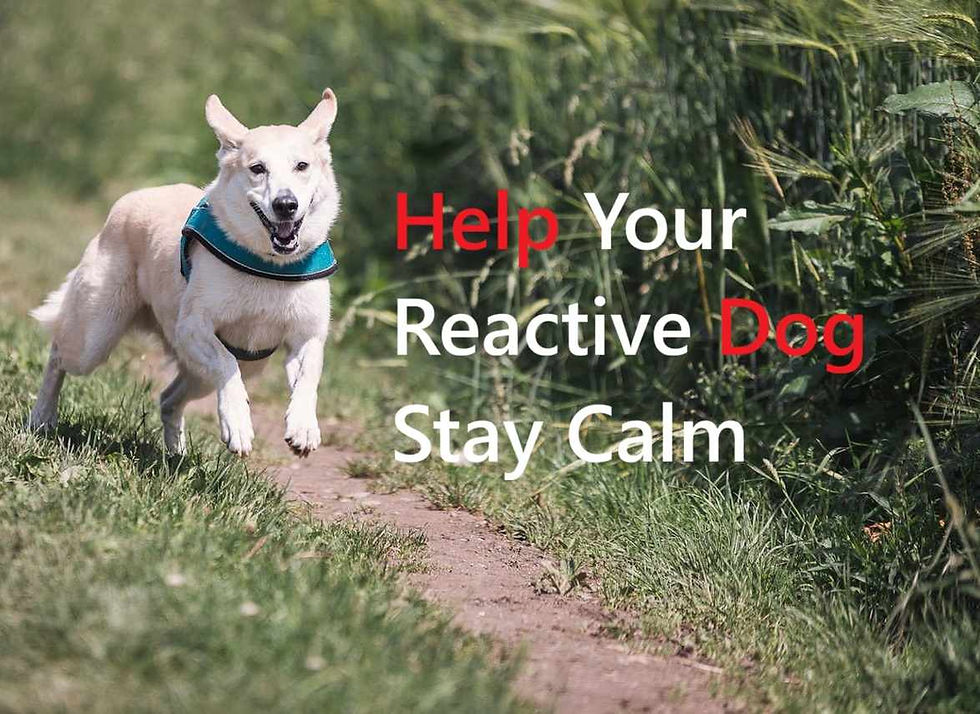
1. What Reactivity Really Is — and Why Your Dog Isn’t Misbehaving
Reactivity is an emotional response to something your dog finds overwhelming. It’s rooted in fear, frustration, stress, or uncertainty — not stubbornness.
Common triggers include:
Other dogs
Strangers
Loud noises or sudden movements
Busy streets or unfamiliar environments
Typical reactive behaviours:
Barking
Lunging
Growling
Staring or freezing
Pulling intensely on the lead
Reactivity often develops due to:
Lack of early socialisation
A past negative experience
Genetics
Anxiety
Confusing communication or inconsistent guidance
Understanding that reactivity is an emotional struggle is the first step to helping your dog.
2. How Desensitisation Helps Your Dog Relax Around Triggers
Desensitisation teaches your dog that their trigger isn’t dangerous. It works by:
Exposing the dog to the trigger at a very low intensity
Keeping the dog calm and relaxed
Slowly increasing intensity as they become comfortable
Pairing the trigger with something positive, like treats or praise
This method rewires your dog’s emotional response:
From fear → to neutrality → eventually to calm confidence.
Desensitisation is safe, humane, and extremely effective when done correctly — and it works especially well when your dog is kept below threshold (calm enough to take treats and respond).
3. Prepare Before You Start (Essential for Success)
Good preparation prevents setbacks. Before your first session:
Identify exact triggers
Write down:
What your dog reacts to
At what distance the reaction starts
What the reaction looks like
Environments where it’s better or worse
Gather your tools
Use:
High-value treats (cheese, chicken, sausage)
Comfortable harness
Lead or long line
Choose the right training environment
Start somewhere:
Quiet
Open
Predictable
With enough space to move away
Preparation is half of the success with reactive dogs.

Join Our New Facebook Group:
Share your successes, ask for advice, and connect with fellow dog lovers.
4. Step-by-Step Desensitisation You Can Start Right Now
Step 1: Find your dog’s "safe distance"
This is where your dog notices the trigger but:
Stays calm
Can turn to you
Can eat treats
Doesn’t stiffen or pull
If they react → you’re too close.
Step 2: Work at that distance
Whenever the trigger appears:
Trigger appears → treat immediately.
Keep your dog calm and relaxed.
Keep the lead loose.
Keep sessions 5–10 minutes.
Step 3: Slowly decrease the distance
Only move closer when your dog stays calm at the previous distance.
Signs your dog is ready:
Soft body language
Eager to take food
Short glances at trigger
Able to look back at you
If the dog becomes tense → go back a step.
Step 4: Add gentle movement
Once your dog is comfortable:
Walk parallel to the trigger
Watch a trigger walk past at distance
Allow your dog to move behind you
Practice walking away calmly
Movement builds confidence.
Step 5: Repeat in new places
Reactivity is very context-specific. Practise in:
Parks
Quiet streets
Busier streets
Car parks
Green spaces
Near your home
Each new location strengthens your dog’s emotional resilience.
5. Troubleshooting: When Things Don’t Go Smoothly
Reactivity training rarely moves in a straight line. Expect ups and downs.
If your dog reacts:
Move away calmly
Let them decompress
Return to a safer distance next session
If progress plateaus:
Use higher-value treats
Shorten sessions
Reduce difficulty
Choose quieter training spaces
If you keep running into triggers accidentally:
Pick open areas with long sight-lines to avoid surprises.
6. Extra Tips for Faster, Smoother Progress
✓ Train when the dog is calm. Over-aroused dogs can’t learn.
✓ Use enrichment daily. Sniffing, licking, chewing, puzzle toys — all reduce stress.
✓ Protect your dog’s space. Politely block approaching dogs or people. Your dog needs safety first.
✓ Track your progress weekly. Owners who track improvement see results more clearly.
✓ Stay calm yourself. Your dog uses your emotional state as information.
Conclusion: You Can Help Your Reactive Dog Feel Safe Again
Reactivity is stressful, but with the right structure and consistency, your dog can learn to feel calmer and more in control. Desensitisation isn’t a quick fix, but it is one of the most powerful tools for changing how your dog feels — not just how they behave.
With patience, small steps, and positive reinforcement, you can help your dog move from fear and overwhelm to confidence and stability. And every tiny win you achieve together is a step toward a happier, more harmonious life.
Stay Connected and Get Help When You Need It
You're not alone on this journey. Join our growing community of passionate dog lovers and experts:
Join Our New Facebook Group: Dog Behaviour & Training Support – Share your successes, ask questions, and learn from others.
Follow us on Instagram 👉 @mdlhappyanimals1 for daily dog training tips and behind-the-scenes moments.
Join the conversation on X! 👉 @DogMDL – Stay updated with fast training advice and expert insights.

Contact me today to get started!
If you're looking for expert advice on dog behavior issues, you're in the right place!
I offer personalized support, both in-person and online, to help your furry friend thrive.


Comments